
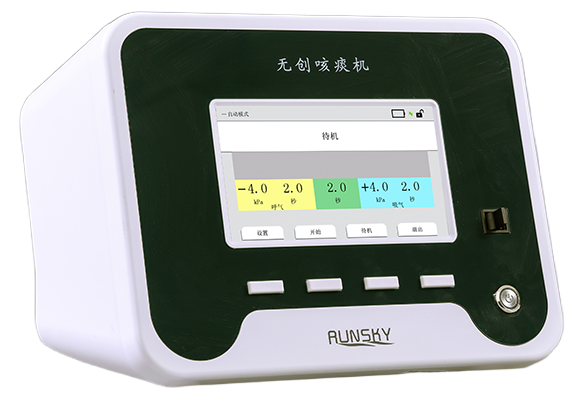
Coughing is a reflexive defense action that can clear respiratory secretions. Any other treatment method that achieves results such as improved secretion characteristics, loosening of sputum in the airway, ultimately requires coughing to expel secretions. However, many patients have weakened cough reflex due to various diseases, with cough peak flow rate below 160L/min, resulting in weak sputum production.
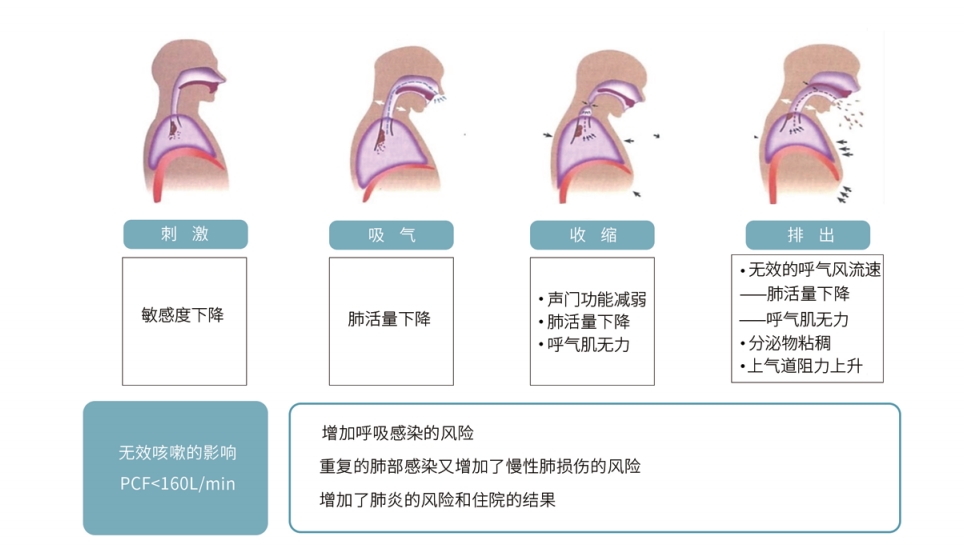
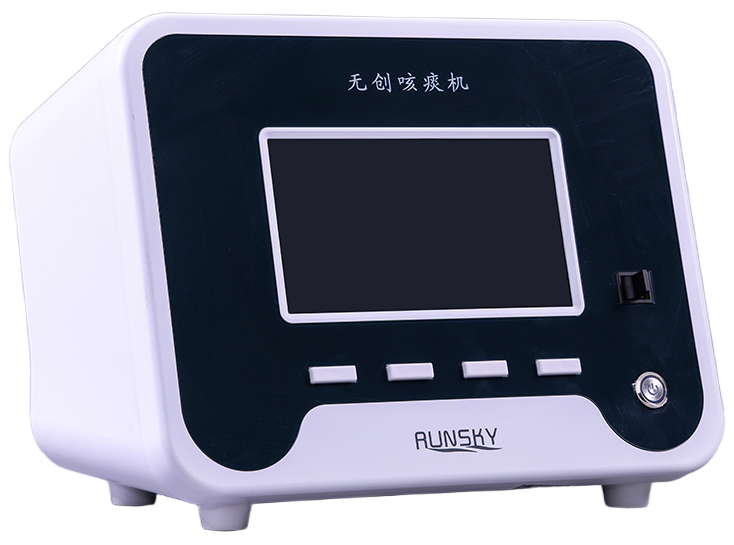
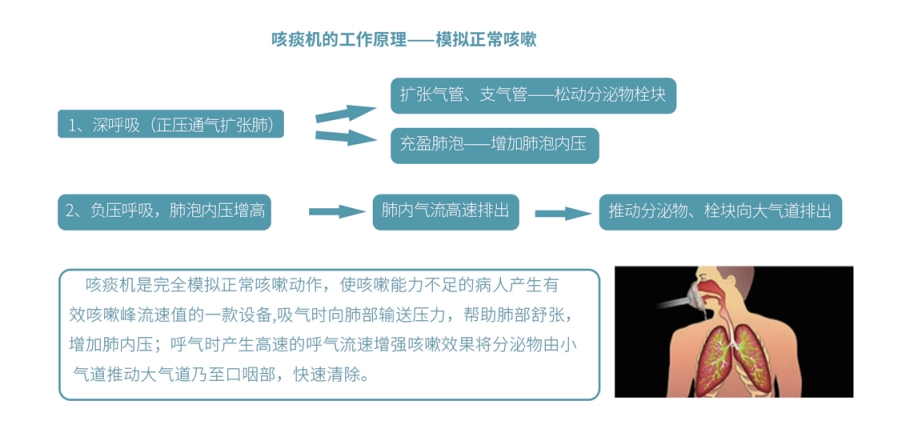
The cough machine simulates coughing by producing a suction effect on the entire respiratory system through positive pressure aspiration and quickly switching to negative pressure aspiration, resulting in a higher cough peak flow rate.
Patients without cough function
Neurological disorders (ALS, SMA, myasthenia gravis, and spinal cord injury); The patient is unable to cough independently or the cough peak flow rate is less than 160L/minute (ineffective cough). The normal cough peak flow rate is between 360-1000L/minute;
Patients with weak cough function
Long term bedridden patients, postoperative patients, patients with pneumoconiosis, and patients with difficulty in expectoration; Patients with chronic respiratory diseases such as chronic obstructive pulmonary disease (COPD) and atelectasis;
Tracheotomy patients
Non invasive cough machine can exercise patients' atelectasis. Through long-term periodic exercise, it can alleviate or improve patients' lung function, airway obstruction, etc
Pulmonary rehabilitation patients
Exercise chest muscles, assist with deep breathing to help inflate the lungs, and prevent local atelectasis.
ICU、 Respiratory, thoracic surgery, geriatrics, pediatrics, rehabilitation, neurology, neurosurgery, etc.
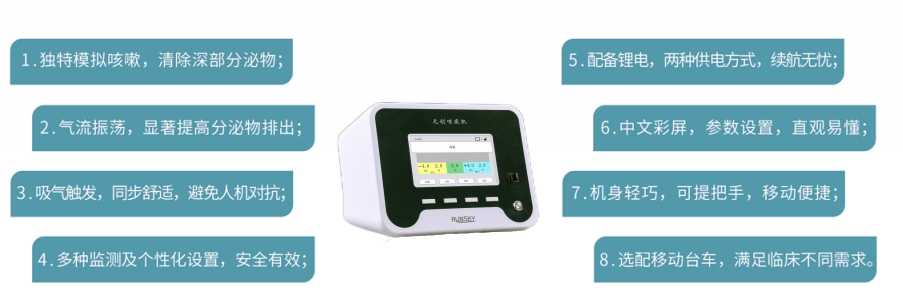
1. Adopting physiological techniques of positive inspiratory pressure and negative expiratory pressure to expel phlegm;
2. Effective treatment of sputum "movement" in lung diseases such as COPD and sputum discharge in non lung diseases;
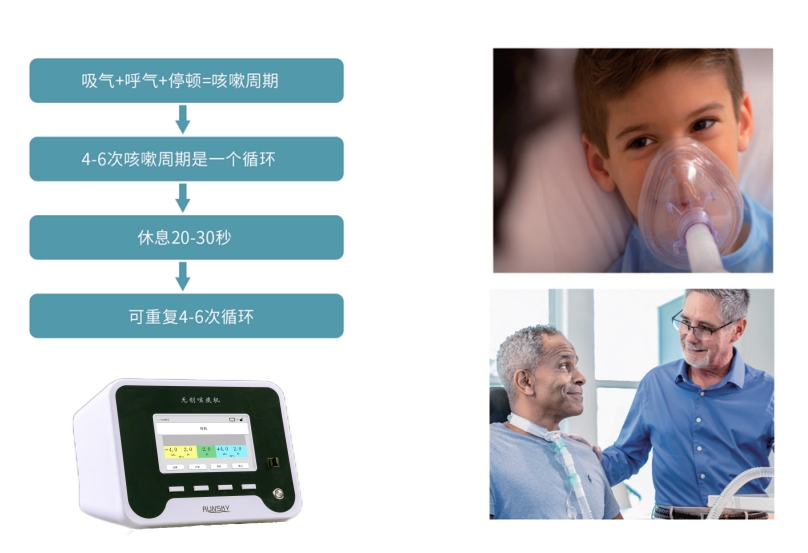
3. Patients can be connected through a face mask, oral adhesive, or tracheal intubation to non invasively clear airway secretions;
4. Automatically work under set pressure and time, maximizing the savings in medical workload;
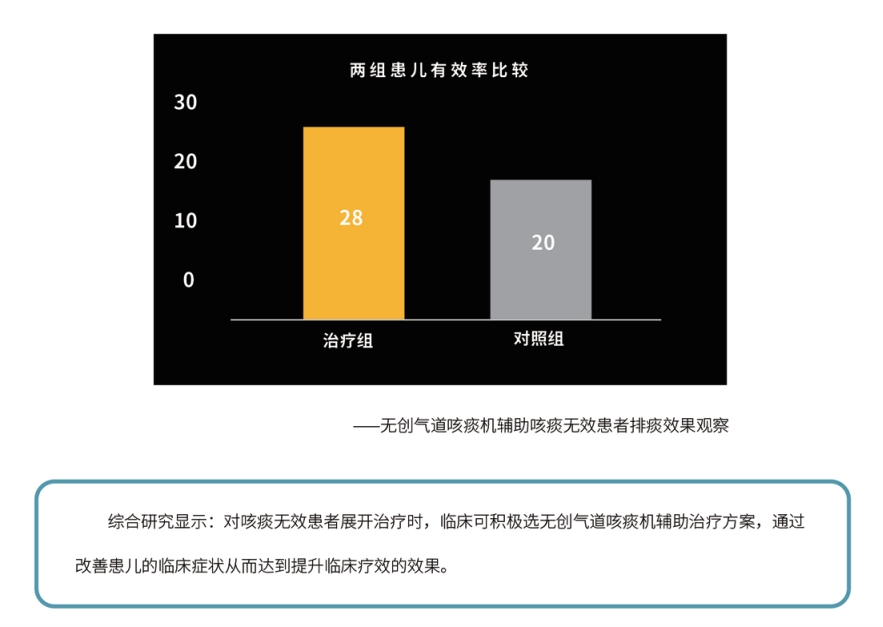
5. After use, it can improve respiratory and oxygenation indexes and reduce the incidence rate of respiratory tract infection;
6. Safe, non-invasive, and comfortable suction therapy as a substitute for treatment.